History of the caves
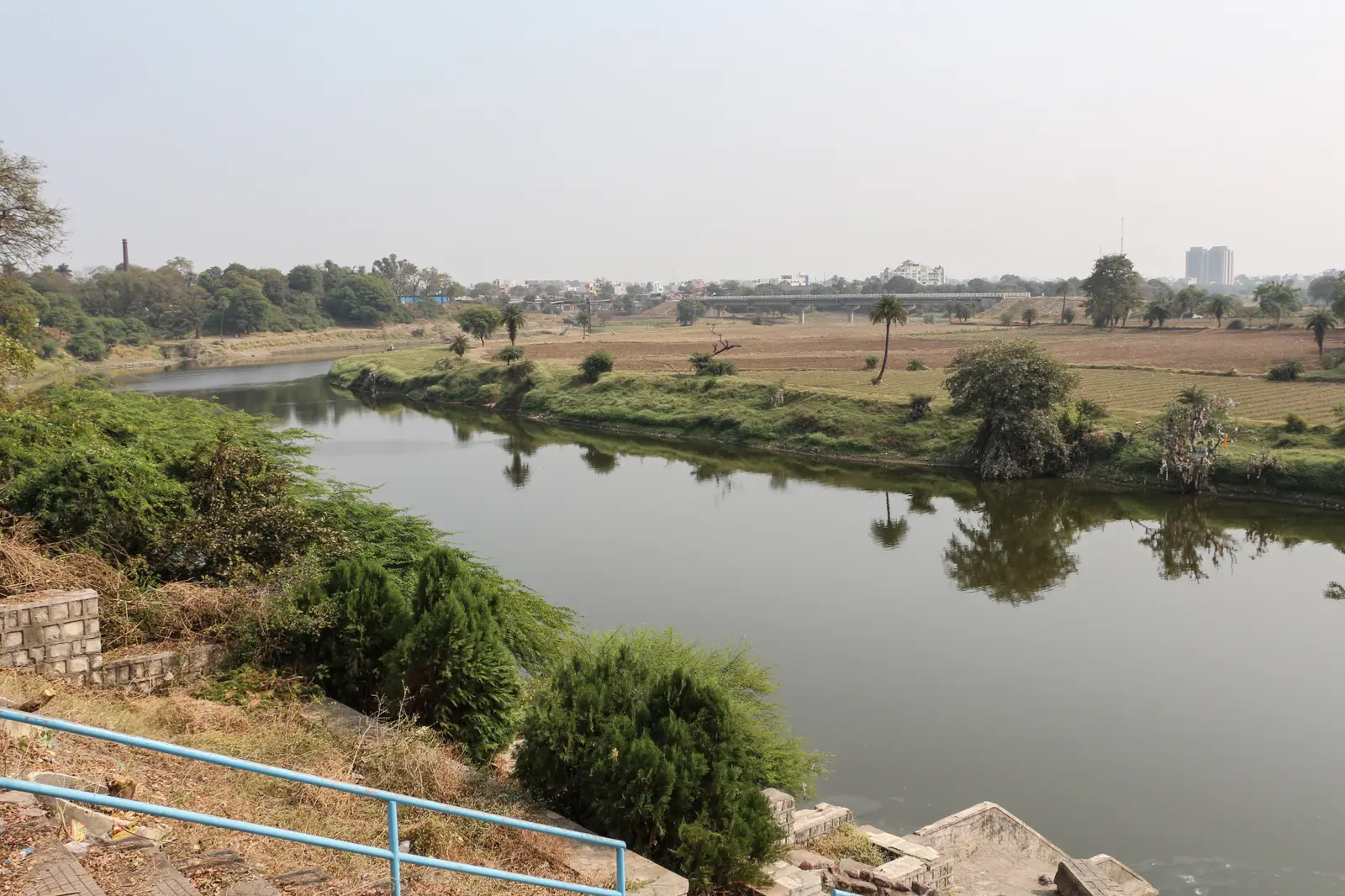
The caves stand on the high bank of the Shipra in the oldest quarter of Ujjain, the Garh area, where the ancient city of Ujjayini once lay. Most guides and the Hindi Wikipedia entry on Ujjain tourism assign the structure to about the eleventh century and describe it as the remains of an older building, repaired in later times. Several writers call it the surviving part of a two-storeyed monastery of the Paramara period, and some point to carved pieces that look Jain and suggest a still earlier vihara.
An English account of 1801 by William Hunter already describes a sunken court, rows of stone pillars and small underground rooms lined with heavy stone slabs. By about the fourteenth and fifteenth centuries the place had become a seat of the Nath yogis, and it has remained in their keeping.
The legend of Raja Bhartrihari and the fruit of immortality
According to tradition, Bhartrihari ruled Ujjain and was the elder brother, or step-brother, of Vikramaditya. The best-known story says that a holy man, in many tellings Guru Gorakhnath himself, gave the king a fruit that granted lasting youth. Bhartrihari, deeply attached to his queen Pingala, gave it to her.
She passed it to a man she secretly loved, he gave it to a courtesan, and the courtesan, thinking the king most worthy of it, brought it back to the palace. Seeing the fruit return, the king understood how desire had bound each of them and lost his taste for the world. Another telling adds a hunt in which Gorakhnath revived a slain deer and awakened the king.
Bhartrihari handed the kingdom to Vikramaditya and left as a yogi. These are sacred legends rather than recorded history.
Twelve years of tapasya: Indra, Gopichand and the sealed passage
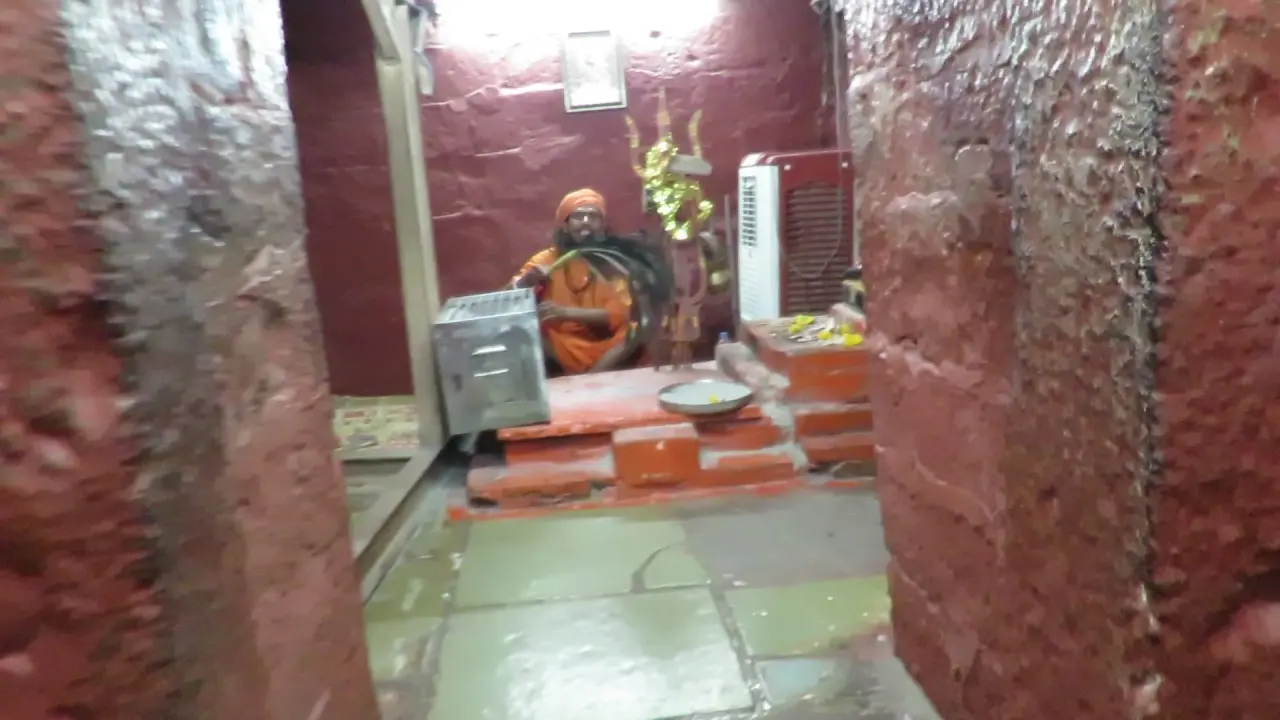
Devotees believe that Bhartrihari sat in meditation in the lower chamber for twelve years. According to tradition, Indra grew afraid of the power of this tapasya and struck at the yogi with his vajra, or hurled a great rock; Bhartrihari is said to have stopped the falling stone with one raised hand. A mark on the slab above his seat is shown to visitors as the print of that hand.
The smaller cave beside it is named after Gopichand, remembered in Nath lore as Bhartrihari's nephew, the son of his sister Mainavati, who also renounced a throne. Local belief also speaks of a passage, now closed with a grating, that once led to the four dhams or to Chunar near Varanasi. No such tunnel has been documented; it is part of the lore of the place.
What you see inside
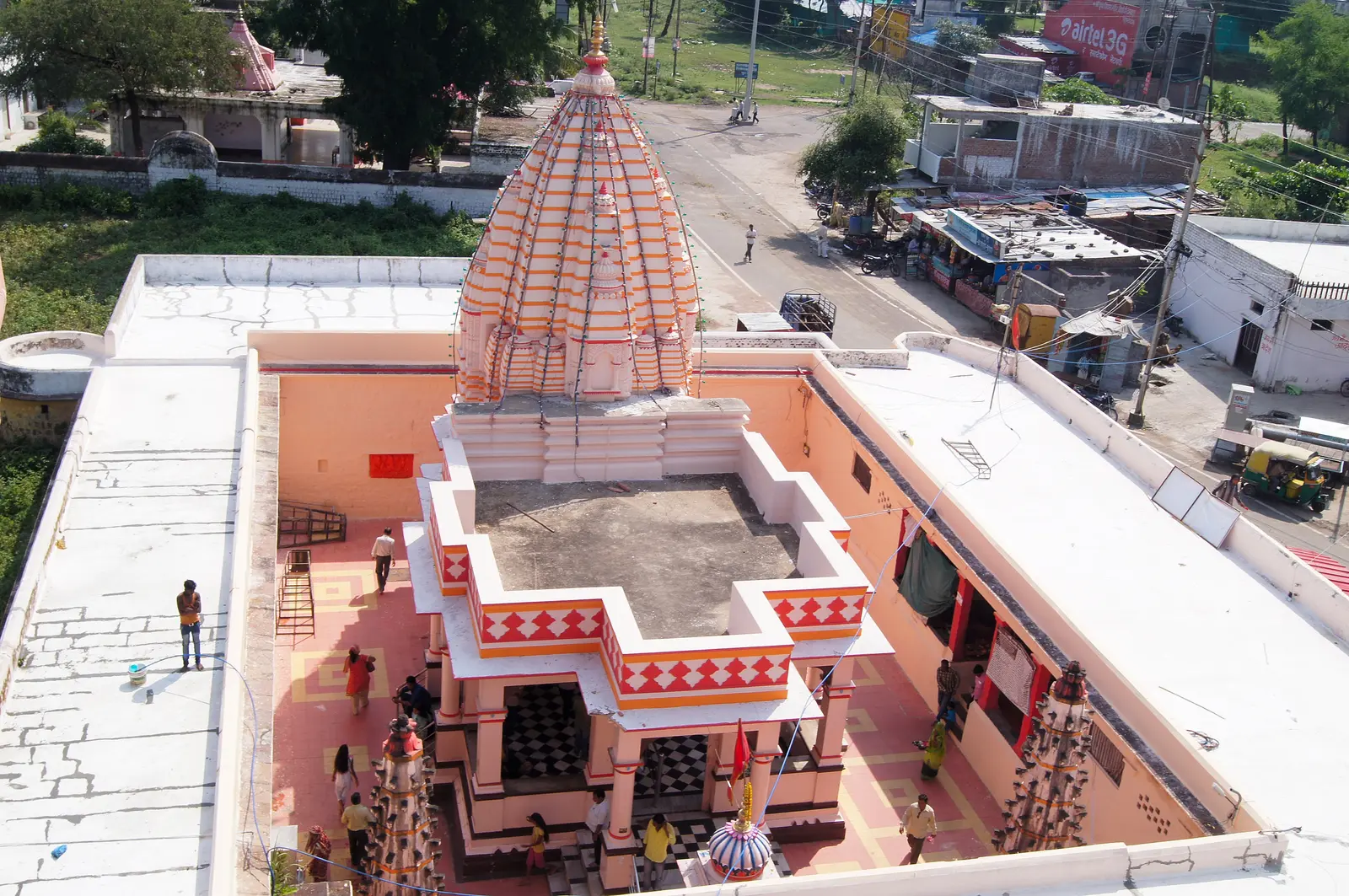
A gateway with a tiered tower in the southern style, a recent addition, leads into the complex. From the courtyard a narrow doorway and steep stone steps go down into the main cave. The chambers are small and low, roughly seven to eight feet high, with ceilings of large stone slabs resting on carved pillars; old sculptures and temple fragments are set into the walls.
In the innermost room are the image of Bhartrihari, a Shiva linga and the dhuni. The second cave, of Gopichand, lies close by. Above ground the complex has a Navnath temple, shrines of Matsyendranath, Kal Bhairav and other deities, samadhis of earlier Nath mahants and a gaushala. Visitor accounts differ on whether the rooms are cut from rock or built of masonry; early descriptions favour built stonework set into the river bank.
Bhartrihari the poet: Niti, Shringara and Vairagya Shataka
Bhartrihari's name lives chiefly through the Shatakatraya, three Sanskrit collections of about a hundred verses each. The Niti Shataka speaks of right conduct, learning, friendship, wealth and the ways of the wise and the foolish. The Shringara Shataka dwells on love and beauty and on how strongly they hold the mind.
The Vairagya Shataka turns away from all this and praises contentment, the forest and devotion to Shiva. The verses are short, pointed and easy to remember, which is why they are still quoted in homes and classrooms. Scholars place the poet around the fifth century CE and note that manuscripts differ widely, with about two hundred verses common to all.
Tradition holds that some of these poems were composed in this cave. Whether the poet is the same person as the grammarian Bhartrihari, author of the Vakyapadiya, remains debated.
भोगा न भुक्ता वयमेव भुक्तास्तपो न तप्तं वयमेव तप्ताः ।
कालो न यातो वयमेव यातास्तृष्णा न जीर्णा वयमेव जीर्णाः ॥
We did not consume pleasures; we ourselves were consumed. We did not perform austerity; we ourselves were scorched. Time did not pass; we passed. Desire did not grow old; we grew old.
Niti Shataka
Speaks of right conduct, learning, friendship, wealth and the ways of the wise and the foolish.
Shringara Shataka
Dwells on love and beauty, and on how strongly they hold the mind.
Vairagya Shataka
Turns away from all this and praises contentment, the forest and devotion to Shiva.
The Nath tradition at the gufa
The Nath sampradaya is a Shaiva order of yogis that traces itself to Adinath Shiva through Matsyendranath and Gorakhnath, and Bharthari Nath is counted among its great siddhas. The Garh area of Ujjain is closely tied to this lineage: the shrine of Pir Matsyendranath stands a short distance away on the same river bank, and Gorakhnath is believed to have practised sadhana here and initiated Bhartrihari. Nath ascetics live in the complex, tend the dhuni whose ash devotees take as vibhuti, and conduct the daily worship.
Nath sadhus from other places camp outside the caves to meditate, especially around festivals. In September 2023 Yogi Adityanath, Gorakshpeethadhishwar of Gorakhpur, visited and offered worship here, as reported by Zee News. For Nath followers the gufa is a siddha-peeth, a place sanctified by a realised yogi.
Why people come here
The gufa is unlike the large temples of Ujjain. There is no grand sanctum and little ceremony; a visitor climbs down into a small, dim room and stands where, by tradition, a king chose silence over a kingdom. Pilgrims come for darshan of Bhartrihari and the dhuni, readers of Sanskrit come because of the Shatakas, and many simply sit for a few quiet minutes.
The story it carries, that love, power and wealth do not last and that peace is found within, speaks to people of every background. The site is usually visited together with Gadkalika, Kal Bhairav, Pir Matsyendranath, Mangalnath and Sandipani Ashram, all in the same northern part of the city. The Shipra flowing below and the old trees of the complex add to the calm.
At a glance
- Location
- Bank of the Shipra river, near Gadkalika temple, Ujjain, Madhya Pradesh
- Associated with
- Raja Bhartrihari (Bharthari), poet of the Shatakatraya and a revered Nath yogi
- Tradition
- Nath sampradaya (lineage of Matsyendranath and Gorakhnath)
- Age of the structure
- Generally assigned to about the 10th-11th century CE (Paramara period)
- Caves
- Two main caves, Bhartrihari's and Gopichand's (some accounts count three)
- Entry
- Free, as reported by most visitor guides
- Distance from Ujjain Junction
- About 4 km
- Distance from Mahakaleshwar
- About 3.5 to 4.5 km by road